
As we celebrate Child Life Month, we are proud to highlight the compassionate professionals who help make MUSC Shawn Jenkins Children's Hospital a place of healing for the whole child — not just the diagnosis.
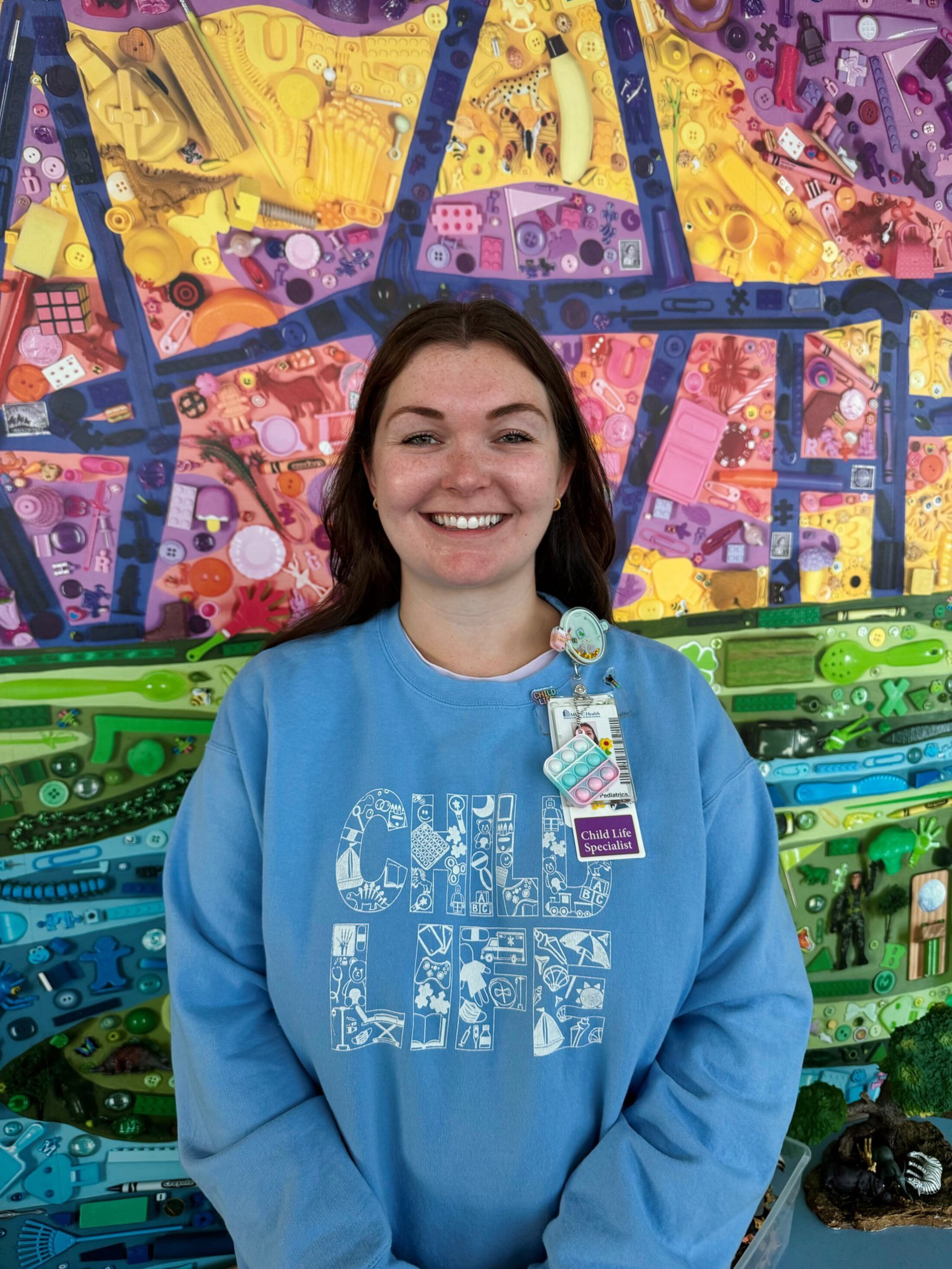
We spoke with Amelia Brackett, a certified Child Life specialist, about the role of Child Life and how philanthropy makes this work possible.
Can you describe the role of a Child Life specialist and the impact on patients and families?
No matter a patient’s age, or whether an admission is planned or unexpected, hospitals can be unfamiliar and overwhelming. Certified Child Life specialists provide evidence-based, developmentally appropriate and individualized psychosocial support to minimize trauma during a hospital stay.
Through therapeutic play, preparation, coping strategies and emotional support, we give children a sense of control in an environment that can feel scary and unpredictable. Our work is essential because the emotional safety of patients and families directly affects their ability to cope with medical care, both now and in the future.
How does philanthropic support enhance the care and comfort you provide?
Philanthropic support enhances the care we provide each day.
Donor-funded resources — such as sensory materials, therapeutic art activities and comfort items — give patients positive outlets for expression and processing. Materials that recognize birthdays and other milestones at the bedside help maintain a sense of normalcy during prolonged admissions.
Medical play toys and books help patients understand what is happening to their bodies and minimize fear. Philanthropic support also allows our department to access the tools and resources needed to promote comfort, regardless of the length or complexity of a child’s stay.
In what ways do donor-funded programs and resources help reduce fear and anxiety for young patients?
In addition to specialized medical play materials that prepare children for procedures and promote predictability through education and familiarization, donor support provides comfort items.
Our emotional safety initiative includes access to nonpharmacological pain management options and individualized coping plans that reduce fear and enhance a child’s sense of control.
Because of donor generosity, we can respond to each child’s unique needs without limitation.
Can you share a moment that illustrates the difference Child Life services make for a child or family?
In the Pediatric Intensive Care Unit, patients and families often face unfamiliar and stressful procedures and conversations.
A school-age patient was admitted after a trauma that required multiple procedures and an ostomy. Using donor-funded medical play materials, I created a doll with matching medical equipment to help explain the patient’s new ostomy.
Through medical play, the patient explored the equipment and asked questions. The patient learned what an ostomy was and why it was necessary. Together, we created a book to share with classmates to explain the hospitalization, giving the patient a sense of control over the experience.
Because the child would have future admissions, I worked closely with the parents and medical team to identify coping strategies during procedures to help minimize medical trauma.
The patient was discharged with an age-appropriate understanding of the condition, coping skills for stressful moments and a plan to return to school with confidence.
What would you want supporters to know about the impact of their gifts?
I hope supporters know their donations affect the work we do every day across the hospital.
Philanthropy allows a child to walk into surgery with a coping plan instead of fear. It helps siblings feel included. It reassures parents that their child’s emotional well-being is cared for alongside physical health.
In the most difficult circumstances, donor-funded resources provide meaningful keepsakes that honor a child’s experience.
We cannot always prevent a hospital visit, but we can shape how a child and family experience and remember their time at MUSC.