
As the cost of higher education continues to rise and the demand for skilled health care professionals grows, scholarships play an increasingly vital role in shaping the future of care – for students and for the communities they will one day serve.
At MUSC, the donors who make these scholarships possible are motivated by deeply personal reasons. Many give to ease the financial burden of health care education, honor those who shaped their own journeys or ensure the next generation has the support they once received.
In some cases, those gifts also create meaningful connections between donors and recipients – relationships that reflect what’s possible when a community comes together to invest in compassionate, well-prepared health care professionals.
College of Nursing scholarships
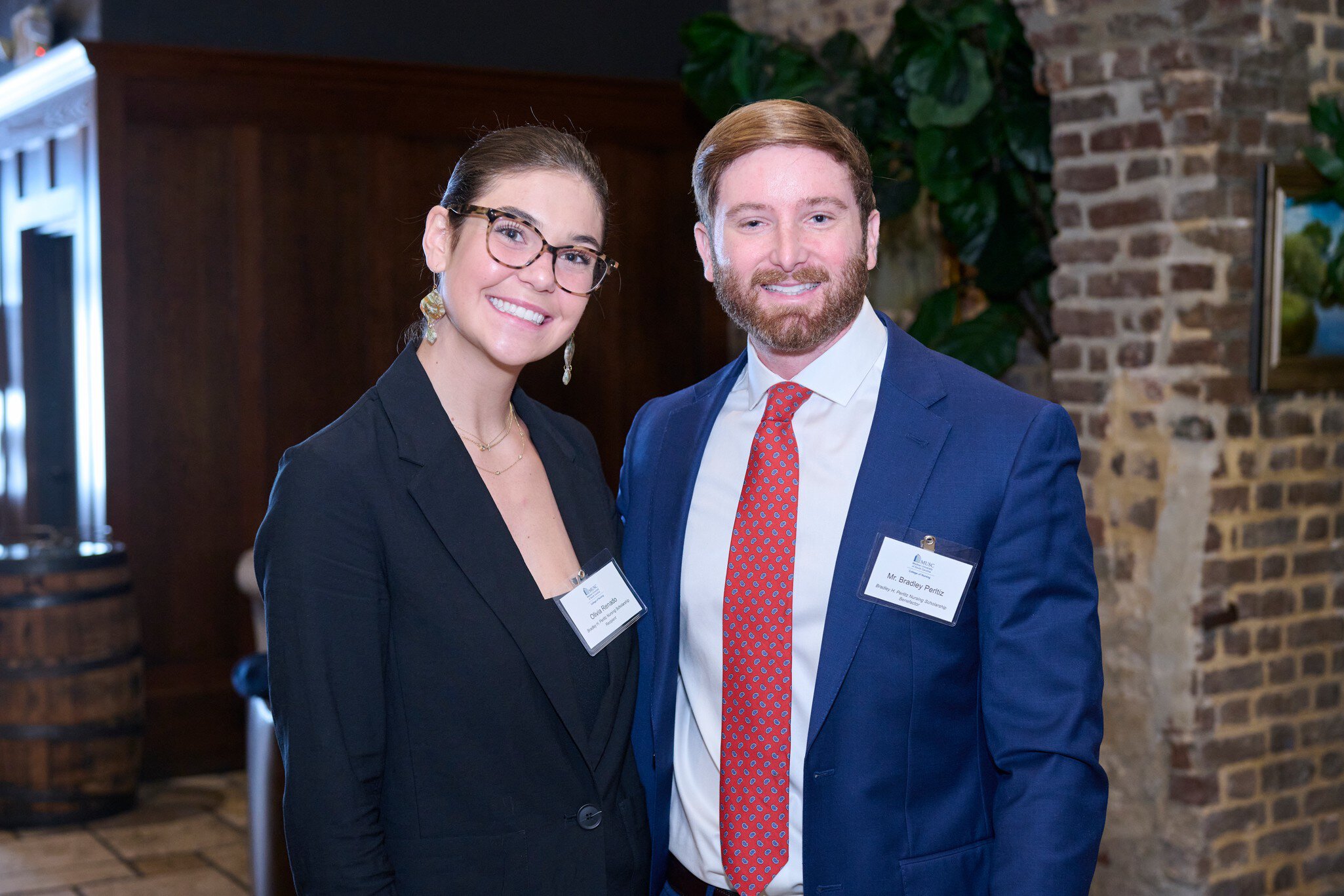
Bradley Perlitz meets the inaugural recipient of the Bradley H. Perlitz Nursing Scholarship.
Fostering connection and confidence through nursing scholarships
Bradley Perlitz, a 2022 graduate of the MUSC College of Nursing, knows firsthand the difference scholarships can make. He received the merit-based Barbara Sutton Pace Endowed Nursing Scholarship and the 1883 College of Nursing Scholarship, experiences that inspired him to pay it forward.
“It ignited a fire within me,” said Perlitz, who is currently pursuing his Doctor of Nursing Practice (DNP) at the college. "I decided to make it my mission to have that same impact on others.”
He calculated that by working just one extra day a month as a part-time nurse at MUSC, he could create a scholarship of his own. “Why not sacrifice a day of work to help support a student and make them feel recognized?”
His vision became the Bradley H. Perlitz Nursing Scholarship, which provides supplemental support to graduate-level nursing students. As an expendable fund, Perlitz’s scholarship is available to help current students offset tuition, books or other unexpected expenses.
Why scholarships matter in nursing education
The need for support like this is significant in the MUSC College of Nursing, where nearly all students rely on some kind of financial support.
Additional pressure is on the horizon. Beginning in July 2026, new federal legislation will limit graduate nursing students from borrowing more than $20,000 a year or $100,000 lifetime in federal loans, increasing the importance of private and philanthropic support.
For Perlitz, scholarships helped ease financial strain, but their greatest impact was personal. Knowing that someone believed in him enough to invest in his education made the experience even more meaningful.
“When you believe in a student, that student is invited to believe in themselves,” he said. “That belief doesn’t stop there. It continues to grow and take shape. It shapes how they walk into a patient’s room, how they navigate challenges and how they choose to give back to the world.”
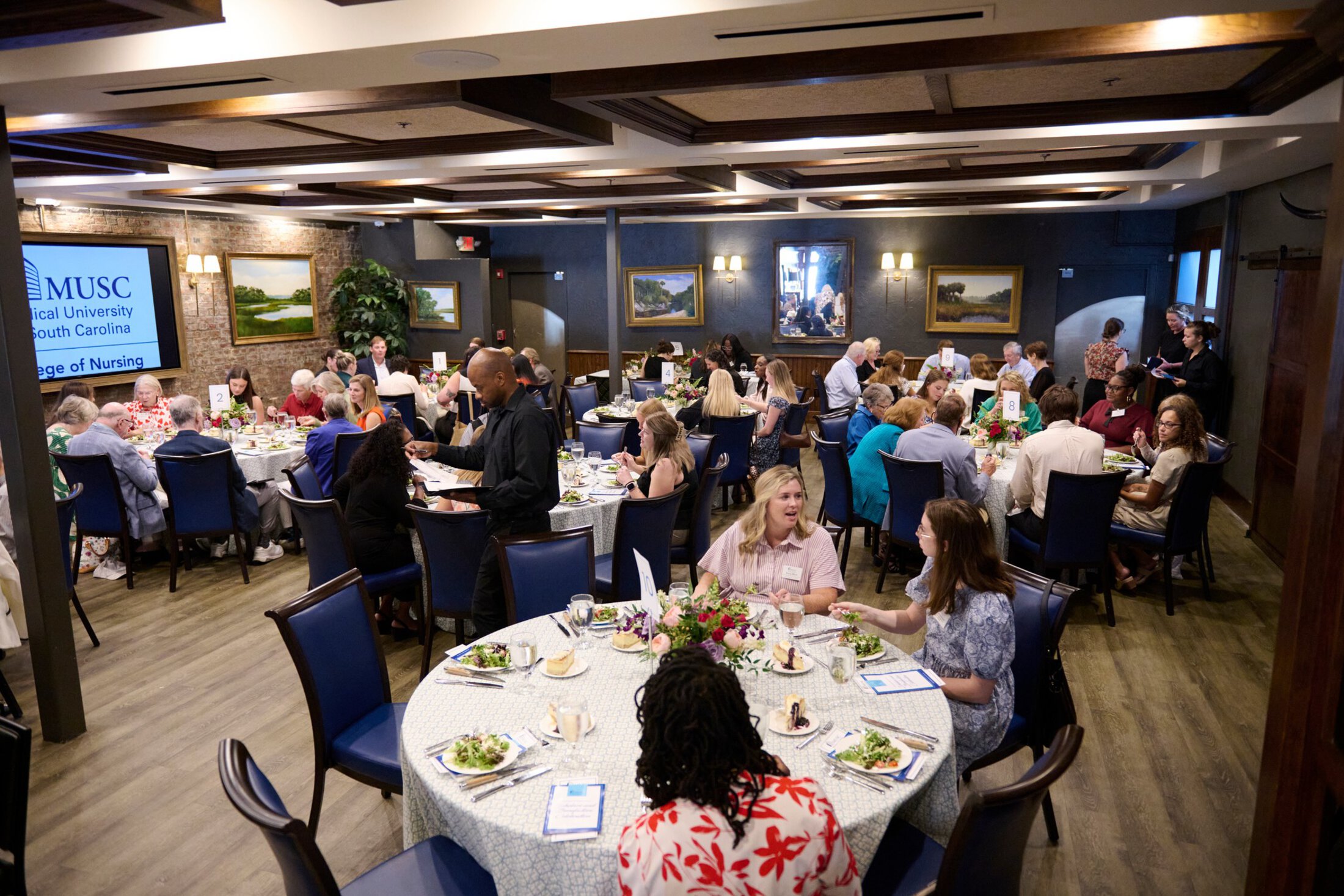
Perlitz met the inaugural recipient of his scholarship at the college’s annual Scholars & Benefactors Celebration in September 2025. Both describe the moment as memorable.
“I now have not only a generous donor, but also a mentor and resource who will encourage me to stay the course and finish strong,” said Olivia Renedo, a DNP student. “I left our conversation feeling deeply supported and even more motivated to reach my goals.”
College of Pharmacy scholarships
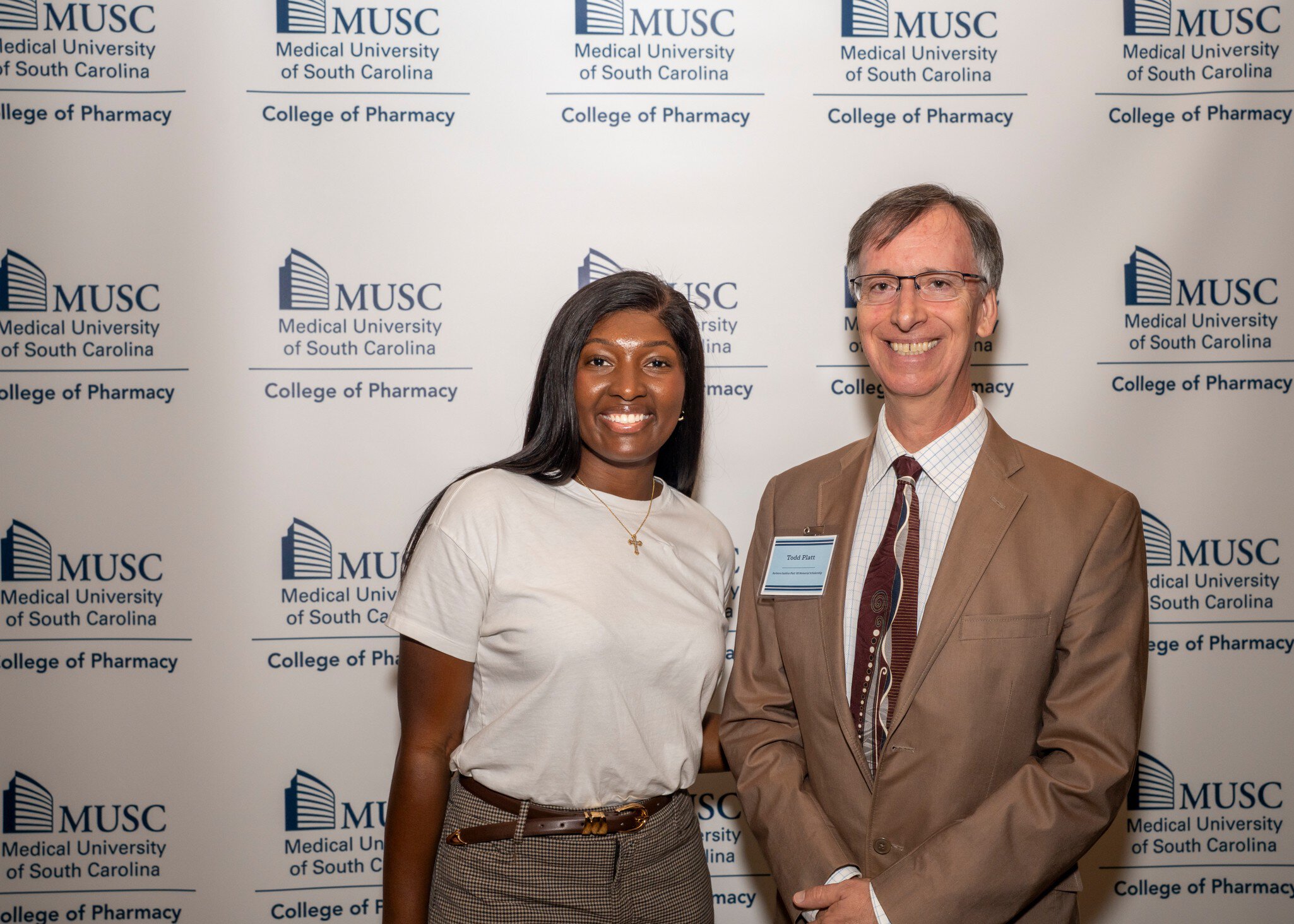
Todd Platt with a recipient of the Barbara Gaskins Platt ’80 Endowed Memorial Scholarship.
A family legacy supporting future pharmacists
When Todd Platt and his brother were 10 and 12 years old, they quizzed their mother with flash cards as she studied for classes at the MUSC College of Pharmacy.
In her 30s, Barbara Gaskins Platt was preparing for a new career at a time when most pharmacy students were much younger, balancing coursework alongside the responsibilities of family life.
Barbara graduated in 1980 and went on to have a successful 29-year career in retail pharmacy. When she passed in 2010, her husband started the Barbara Gaskins Platt ’80 Endowed Memorial Scholarship in her memory.
Like most scholarships in health care education, the Platt Scholarship provides partial support, helping offset educational costs and ease financial pressure for students. As an endowed fund, the original gift is invested so the scholarship can be awarded year after year.
Today, Todd continues his parents’ legacy by ensuring the scholarship can grow over time, with plans in place to increase the level of support it provides to future students.
“I enjoy seeing the enthusiasm the students have for a pharmacy career that’s about purpose, not just a ‘job,’” Todd said. “Education, and not just classwork, is expensive, and I’m honored to continue my mother’s and father’s legacy.”
The average MUSC College of Pharmacy student accrues $168,000 in student debt by the time they walk across the commencement stage – a financial reality that can be especially difficult for students returning to school later in life or pursuing a second career.
Legacy in action: Supporting students returning to school
It’s students like Keyerra Daniels who bring that legacy to life for Todd and the Platt family.
Like her scholarship’s namesake, Daniels returned to school after time away to pursue a career in pharmacy. She spent several years gaining experience in both pharmaceutical industry and research so she could decide what career path she was most passionate about.
Finding funding was one of the biggest challenges she faced.
“With the assistance of this scholarship, I can worry less about the financial aspect of this experience and focus on my studies and building a network within the MUSC and pharmacy community,” she said.
College of Medicine scholarships
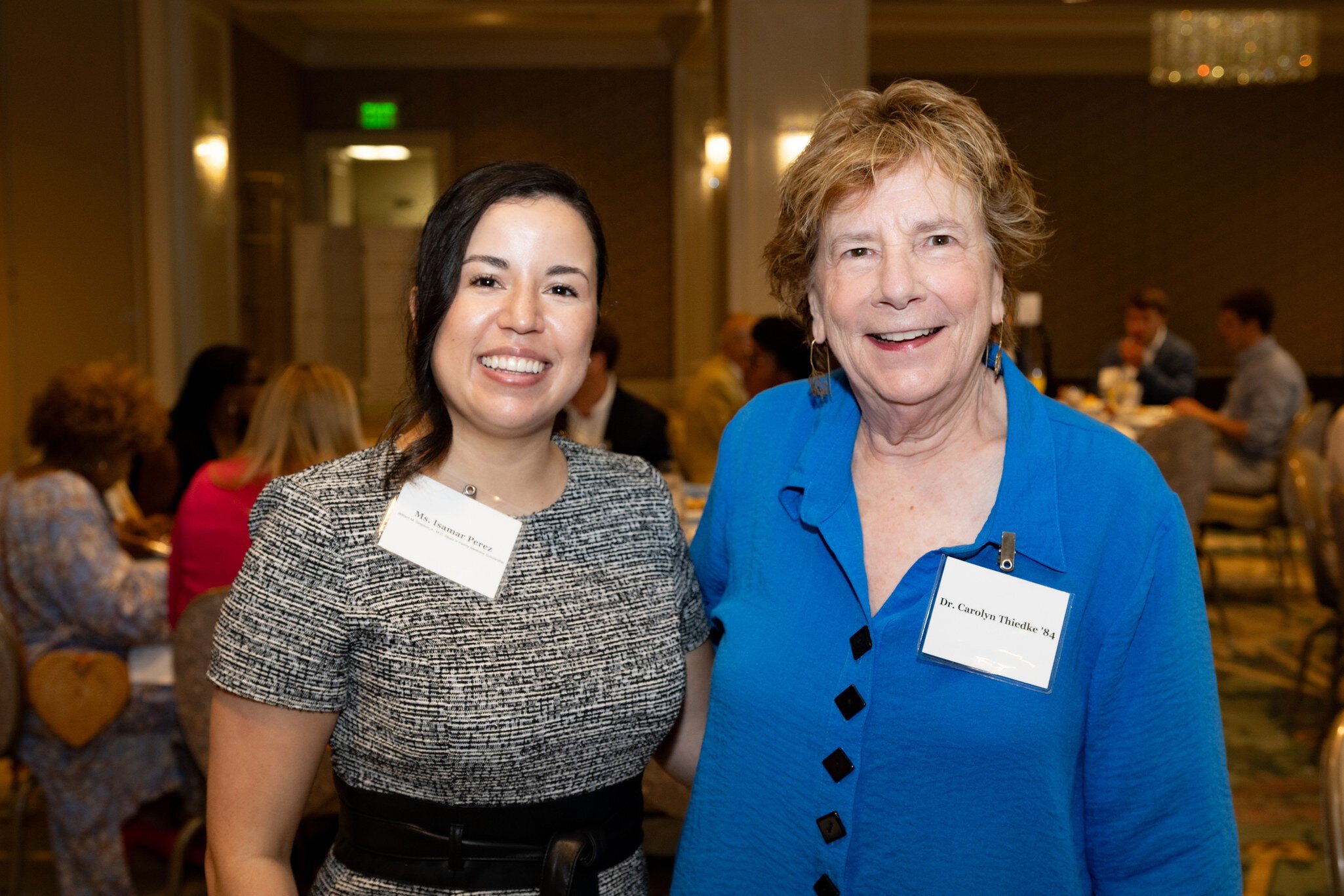
Dr. Carolyn Thiedke and Dr. Isamar Perez Rodriguez met at the 2025 Scholars and Benefactors Banquet, hosted annually by the College of Medicine.
Passing the torch in family medicine
For Carolyn Thiedke, M.D., establishing a scholarship was a way to honor those who shaped her career, and to pass that influence forward to the next generation of family medicine physicians.
A three-time MUSC alumna, Thiedke earned degrees in 1976, 1984 and 1987. She named the scholarship for her mentor, William Simpson Jr., M.D., a 1972 MUSC graduate whom Thiedke calls an exceptional doctor and role model.
“He treated patients and residents alike with kindness and respect,” she said. “He made his personal life visible so we could see how to live a full life as a doctor. In difficult times, he gave me support, which helped me continue.”
Now it’s Thiedke and her husband, Fred Thompson, who are providing support for future physicians through the William M. Simpson Jr., M.D. Ideals of Family Medicine Endowed Scholarship.
Why scholarships are critical for family medicine physicians
The cost of a health care education has never been higher, due in part to declining state support of public colleges and universities nationwide. As a result, students today often graduate with significant debt that can take years to repay.
At the MUSC College of Medicine, over 90% of medical students – more than 660 people – now depend on financial assistance to help pay for their education. With only 152 scholarship funds available, most offering partial support, graduates leave with an average debt exceeding $193,000.
That burden can be especially significant for residents who choose family medicine. Financial pressure can influence specialty choice, making philanthropic support critical for those committed to primary care and community health.
For Isamar Perez Rodriguez, M.D., a 2025 alum of the College of Medicine who matched into a family medicine residency and the most recent Simpson scholarship recipient, family medicine has always felt like a calling.
“I did not come from a privileged situation, so I kept asking myself, ‘How am I going to afford this?’” she said. “I started relying on credit cards, which added up quickly. The scholarship helped alleviate a lot of stress and burden and how I was going to manage my finances throughout residency, especially in the first year, when you're not earning as much.”
Now in her first year of residency at McLeod Regional Medical Center in Florence, South Carolina, Rodriguez is doing what she’s always wanted to do: make an impact on the daily lives of patients.
Knowing that her support helped make that possible is deeply meaningful for Thiedke.
“The most rewarding part is getting to meet these amazing, talented, committed students,” she said. “They keep me optimistic about the future of medicine.”

Erica Rodefer
Associate Director of Communications
Recent Giving Impact stories